Stablecoin Sandwich Explained: The Hidden FX Costs in Cross-Border Payments
July 20, 2026
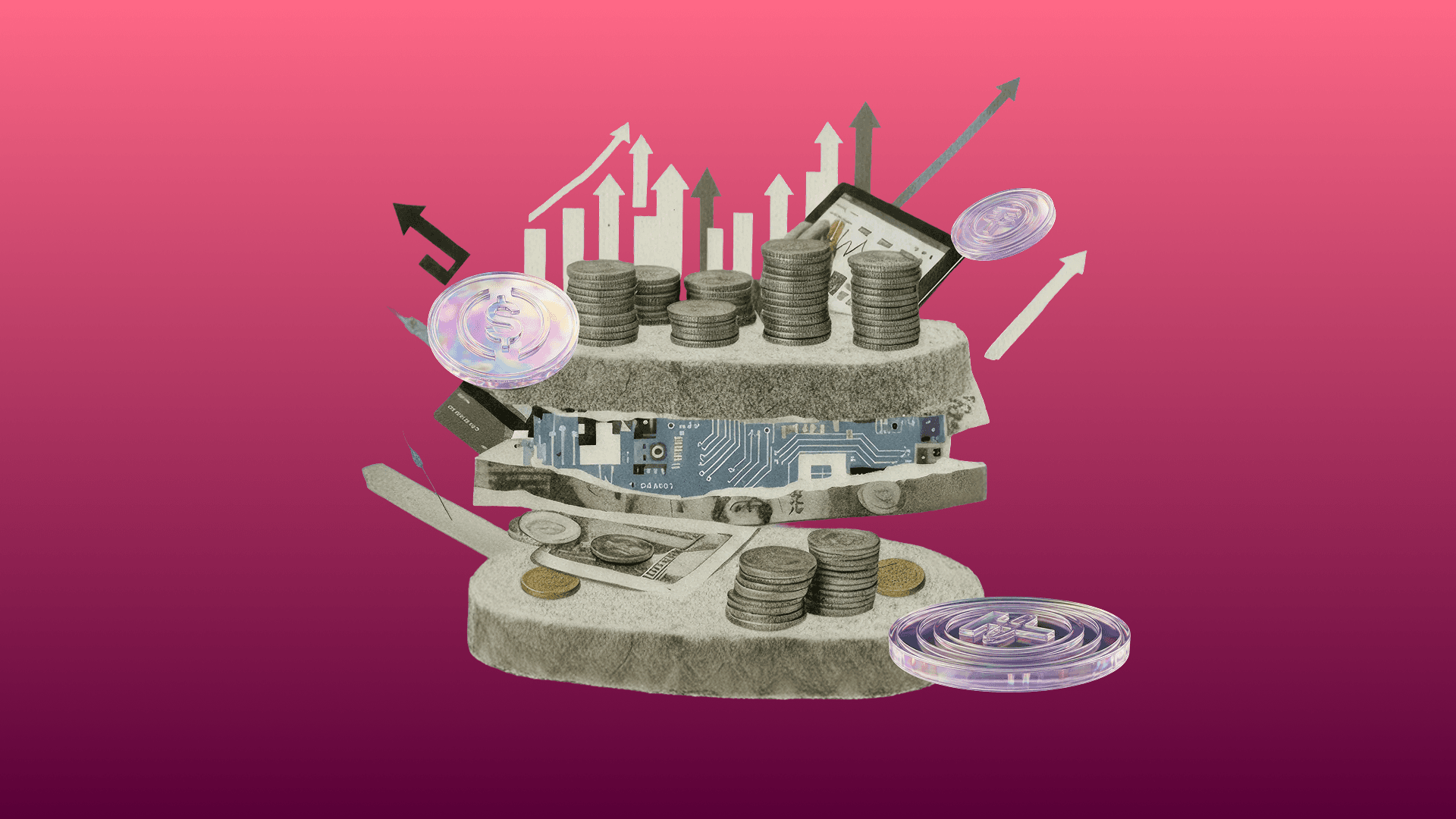
If you've researched how businesses actually move money on stablecoin rails, you've run into the term "stablecoin sandwich." It has become the standard architecture for enterprise cross-border payments: fiat goes in, a stablecoin carries the value across borders, and fiat comes out the other side.
Most explanations stop at the metaphor. This one goes further, because the part of the sandwich everyone celebrates, the onchain transfer, is now the cheapest and easiest step. The economics of the entire payment are decided somewhere else: in the FX.
What Is a Stablecoin Sandwich?
A stablecoin sandwich is a cross-border payment model where the sender's local currency is converted into a stablecoin, the stablecoin moves across a blockchain, and it is converted back into the recipient's local currency at the destination.
The name describes the structure. Fiat currency sits on both ends of the payment (the bread), and the stablecoin transfer sits in the middle (the filling). The sender pays in their own currency, the recipient receives in theirs, and neither side ever has to hold or manage crypto. The stablecoin is settlement infrastructure, not a product either party sees.
How a Stablecoin Sandwich Works: The Three Legs
1. The on-ramp. A licensed provider converts the sender's fiat, whether USD, EUR, BRL, or NGN, into a dollar stablecoin such as USDC or USDT. KYB, AML screening, and the actual currency conversion all happen here.
2. The transfer. The stablecoin moves onchain from the sender's side to the recipient's side. This leg settles in seconds to minutes, costs fractions of a cent on most networks, and runs 24/7/365 with no correspondent banks, cut-off times, or holiday delays.
3. The off-ramp. A licensed provider in the destination market converts the stablecoin into local currency and delivers it through a local payment rail. To the recipient, it looks like a normal bank transfer.
Why the Sandwich Became the Default
The comparison against correspondent banking is not close. A traditional international wire takes 1–5 business days and the global average cost of a cross-border payment sits around 5%, according to World Bank data. A well-executed stablecoin sandwich settles fiat-to-fiat in minutes to hours, with all-in costs typically between 0.5% and 2.5% depending on the corridor.
The model also removes the pre-funding burden. Because settlement is near-instant, payment companies no longer need capital parked in accounts across every corridor they serve, waiting for transactions that haven't happened yet.
Adoption reflects this. Roughly $9 trillion in stablecoins moved globally in the year to October 2025, up 87% year over year, and the bulk of that growth is businesses moving real money rather than traders moving positions.
If you're building payment flows on this model, book a demo with Codex FX to see wholesale pricing on the conversion legs.
The FX Leg Is the Hard Part
Here is what most explainers skip: the blockchain transfer was never the expensive part. It has been commoditized down to seconds and cents. What decides whether a stablecoin sandwich actually beats legacy rails is the two conversions wrapped around it.
Those conversions are FX trades, and FX trades have all the usual problems. The spread you're quoted depends on the liquidity available in that pair, at that size, at that moment. Converting $50,000 of USDC into a major currency is cheap. Converting $5 million into an exotic or emerging-market currency on a Sunday is a different market entirely. When liquidity is thin, providers widen spreads, split orders, or fall back on pre-funded balances, and the sandwich's cost advantage erodes with every basis point.
The data backs this up. Research from the Bank for International Settlements found that the price of acquiring dollars through stablecoins can deviate from traditional FX rates by several percentage points for some currencies, with the largest gaps in economies under macroeconomic stress. In other words, the corridors where stablecoin rails are most needed are exactly where the FX leg is hardest to execute well.
So the real question when evaluating stablecoin payment infrastructure is not "how fast is the transfer?" It is "who is making the market on my conversions, at what depth, and at what spread?"
Sandwich Variants: Sundae and Open-Faced
Two variations on the classic sandwich are worth knowing.
The stablecoin sundae replaces the single dollar stablecoin with two local-currency stablecoins. The sender's fiat converts to a stablecoin in their own currency, the FX swap happens onchain between the two stablecoins, and the recipient takes delivery in their local stablecoin or fiat. This removes the dollar as an intermediate step and can tighten spreads, but it depends entirely on deep liquidity in local-currency stablecoins, which remains thin in most corridors today.
The open sandwich skips the final conversion. The recipient keeps the stablecoin instead of off-ramping to fiat, common in markets where holding digital dollars is the whole point.
Both variants change where the FX happens. Neither makes it disappear.
How Codex FX Handles the FX Leg
Codex FX is a stablecoin-native FX platform built for the hard part of the sandwich: the conversions. It provides wholesale liquidity between USD, USDC, USDT, and local currencies through a single platform and API.
Wholesale OTC pricing. Real-time quotes at institutional rates with tight spreads. You see the full cost of each conversion before you trade.
One leg instead of two. Codex FX prices stablecoin-to-local-currency conversions directly, collapsing the off-ramp and the FX into a single quoted trade.
Sub-30-minute settlement. Most transactions settle in under 30 minutes, 24/7/365, including weekends and holidays.
Liquidity in hard corridors. Deep coverage across emerging and frontier markets, where the FX leg is most expensive on retail rails.
USDC and USDT, every direction. Fiat to stablecoin, stablecoin to fiat, and stablecoin-to-stablecoin swaps without giving margin back through poor execution.
Compliance built in. Onchain and offchain AML controls on every transaction, institutional custody, and KYB designed to take days, not months.
To see what your sandwich costs with wholesale FX in the middle, book a demo with Codex FX.
Frequently Asked Questions
What is a stablecoin sandwich?
A stablecoin sandwich is a cross-border payment flow where fiat currency converts into a stablecoin, the stablecoin transfers across a blockchain, and it converts back into the recipient's local fiat. It delivers blockchain settlement speed while both parties transact in normal currency.
Why is it called a stablecoin sandwich?
Because of the structure: fiat currency on both sides of the payment acts as the bread, and the stablecoin transfer in the middle is the filling. The end users only ever touch the bread.
What is a stablecoin sundae?
A stablecoin sundae is a variant where the FX happens onchain between two local-currency stablecoins instead of routing through a dollar stablecoin. It can tighten spreads where local stablecoin liquidity exists, but that liquidity is still limited in most corridors.
How does Codex FX fit into a stablecoin sandwich?
Codex FX provides the FX legs. It gives PSPs, fintechs, and remittance companies wholesale conversion between fiat, USDC, USDT, and local currencies, with sub-30-minute settlement and 24/7 availability through one API.
To price the FX legs of your corridors, book a demo with Codex FX.