Stablecoin Payments in the Philippines: Cross-Border FX Settlement and On-Ramp Infrastructure
July 27, 2026
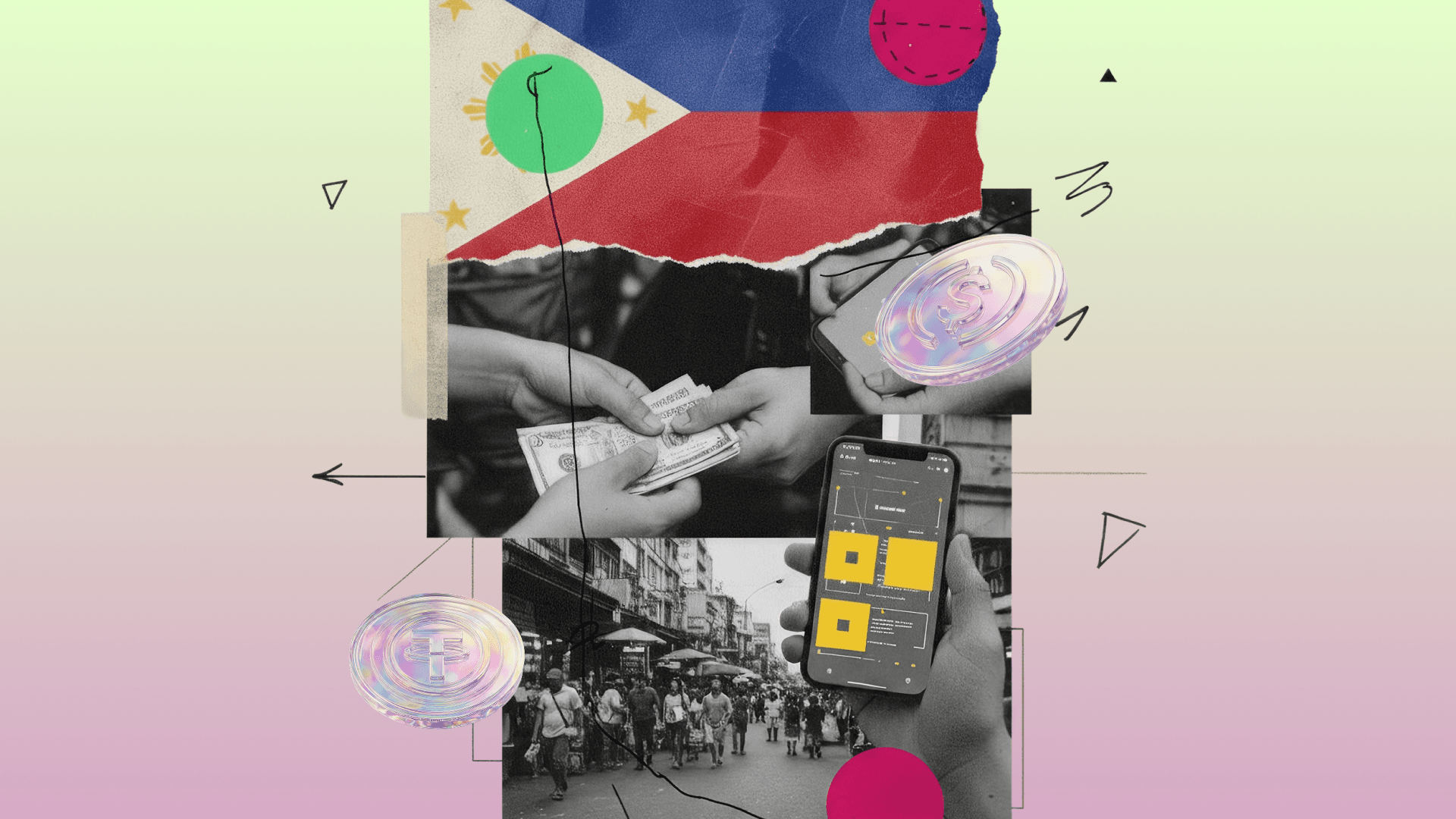
The Philippines runs on money that crosses borders. Overseas Filipino workers sent a record $35.63 billion home through banks in 2025, equal to 7.3% of GDP, and the country consistently ranks among the world's largest remittance recipients. Layer on one of the highest crypto adoption rates globally and you get a market where stablecoin payments aren't a future concept. They're already moving.
For PSPs, remittance companies, and fintechs serving Philippine flows, the question is no longer whether stablecoins fit this corridor. It's how to access dollar liquidity, settle fast, and stay inside a regulatory framework that the central bank polices closely.
Why the Philippines Is a Core Stablecoin Payments Market
Three forces make the Philippines one of the most natural stablecoin markets in Asia.
Remittance scale. Cash remittances hit an all-time high of $35.63 billion in 2025, up 3.3% year on year, with the United States alone accounting for roughly 40% of inflows, followed by Singapore, Saudi Arabia, and Japan. Every one of those corridors is a USD-heavy flow where settlement speed and FX spread decide the economics.
Crypto-native users. The Philippines ranked 9th in the world on the 2025 Chainalysis Global Crypto Adoption Index, after peaking at 2nd in 2022. Adoption here is practical, not speculative: payments, remittances, and dollar access drive usage.
Dollar demand. The peso traded past 59 to the dollar for the first time in late 2025. For importers, treasurers, and families receiving remittances, faster access to dollar-denominated value is a hedge, and USD stablecoins deliver it without a US bank account.
If you move money into or out of the Philippines, book a demo with Codex FX to see wholesale stablecoin FX pricing on your flows.
The Local Rails: InstaPay, PESONet, and E-Wallets
The last mile in the Philippines is genuinely good. InstaPay handles real-time, low-value peso transfers between banks and e-wallets around the clock, while PESONet covers larger batch payments settling same-day. On top of these rails, e-wallets like GCash and Maya have become the default way tens of millions of Filipinos hold and move money.
That is exactly why stablecoins fit here. Domestic movement is instant; the bottleneck is the cross-border leg feeding into it. A payment that arrives in the Philippines as a stablecoin can convert to pesos and reach a bank account or e-wallet through local rails in minutes. The slow part was always getting the value into the country, and that is the part stablecoin settlement replaces.
How the BSP Regulates Stablecoins
The Bangko Sentral ng Pilipinas has regulated virtual assets longer than most central banks, and its posture is clear: permitted, licensed, and supervised.
The VASP framework. BSP Circular No. 1108 (2021) requires any business converting between crypto and pesos to hold a Virtual Asset Service Provider license. A moratorium on new VASP licenses has been in place since September 2022 and remains in force as of mid-2026, with exceptions only for BSP-supervised institutions such as banks and e-money issuers.
Regulated counterparties only. Circular 1108 requires licensed VASPs to transact only with other duly regulated entities, keeping every transaction within an unbroken chain of supervised institutions. For payment companies, that makes counterparty licensing a hard requirement, not a preference.
A peso stablecoin exists. PHPC, a peso-backed stablecoin piloted inside the BSP's regulatory sandbox from May 2024, formally exited the sandbox in June 2025, one of the first central-bank-supervised local stablecoin launches anywhere.
Standards keep tightening. In June 2026, the BSP issued Memorandum M-2026-023, requiring VASPs to run six-pillar due diligence on every listed token, with specific scrutiny of fiat-backed stablecoins' reserves, redemption rights, and liquidity. The Travel Rule applies to transfers of PHP 50,000 and above.
The signal for businesses: stablecoin payments in the Philippines are legitimate and encouraged to formalize, but the compliance bar is real and rising.
The USD-PHP Problem: Where Legacy Rails Fall Short
The dominant flow in this market is dollars in, pesos out. Through correspondent banking, that flow takes 1–5 business days, stops on weekends, and carries FX spreads that compound painfully at remittance and B2B scale. With the peso at historic lows against the dollar, every basis point of spread and every day of settlement delay is money the sender or the business eats.
Stablecoin rails collapse that. Dollars move as USDC or USDT in minutes, any day of the year, and convert to pesos at the destination. The remaining question, and where providers separate, is the FX: who quotes the USD-PHP leg, at what depth, and at what spread.
How Codex FX Powers Stablecoin Payments for Philippine Flows
Codex FX is a stablecoin-native FX platform for payment companies. For businesses moving money through the Philippines corridor, it handles the dollar side of the flow: converting between USD fiat, USDC, and USDT at wholesale rates, so value arrives fast and converts clean.
Wholesale OTC pricing. Real-time quotes at institutional rates with tight spreads, visible before every trade.
Sub-30-minute settlement. Most transactions settle in under 30 minutes, 24/7/365. Remittances don't stop on weekends, and neither does Codex FX.
USDC and USDT, both directions. On-ramp fiat into either dollar stablecoin, swap between them, and off-ramp back to fiat without giving margin away to poor execution.
Built for emerging-market corridors. Deep dollar liquidity in markets where legacy banking access is thinnest, purpose-built for high-volume APAC flows.
Compliance built in. Onchain and offchain AML screening on every transaction, institutional custody, and KYB measured in days. Codex FX operates the way the BSP expects counterparties to: regulated, screened, and auditable.
To price the dollar leg of your Philippine flows, book a demo with Codex FX.
Frequently Asked Questions
Are stablecoins legal in the Philippines?
Yes. Stablecoins are not legal tender, but they are permitted and regulated as virtual assets under the BSP's VASP framework. Businesses converting between crypto and pesos need a VASP license, and the BSP has approved a peso-backed stablecoin, PHPC, through its regulatory sandbox.
Which stablecoins are used in the Philippines?
USDT and USDC dominate cross-border and dollar-access use cases, while PHPC serves peso-denominated flows. Dollar stablecoins are the workhorses for remittances and B2B settlement into the country.
Why are stablecoins popular for remittances to the Philippines?
The Philippines received a record $35.63 billion in cash remittances in 2025, mostly from USD-heavy corridors. Stablecoins move that value in minutes instead of days, at lower cost, and connect directly into fast local rails like InstaPay and e-wallets for the last mile.
How does Codex FX support payments in the Philippines corridor?
Codex FX provides the wholesale FX layer: converting between USD, USDC, and USDT at institutional rates with sub-30-minute settlement, 24/7. Payment companies use it to power the dollar leg of Philippine remittance and B2B flows.
To see how it works on your corridors, book a demo with Codex FX.